I’ve sat across the table from hundreds of people over the years, and this is one of the moments I watch land the hardest. Someone assumes Medicare covers their dental work, or a new pair of glasses, or hearing aids, because why wouldn’t it? It’s health insurance. Then they find out it doesn’t, usually right when they need it most. Let’s fix that before it happens to you.
Original Medicare skips these almost entirely
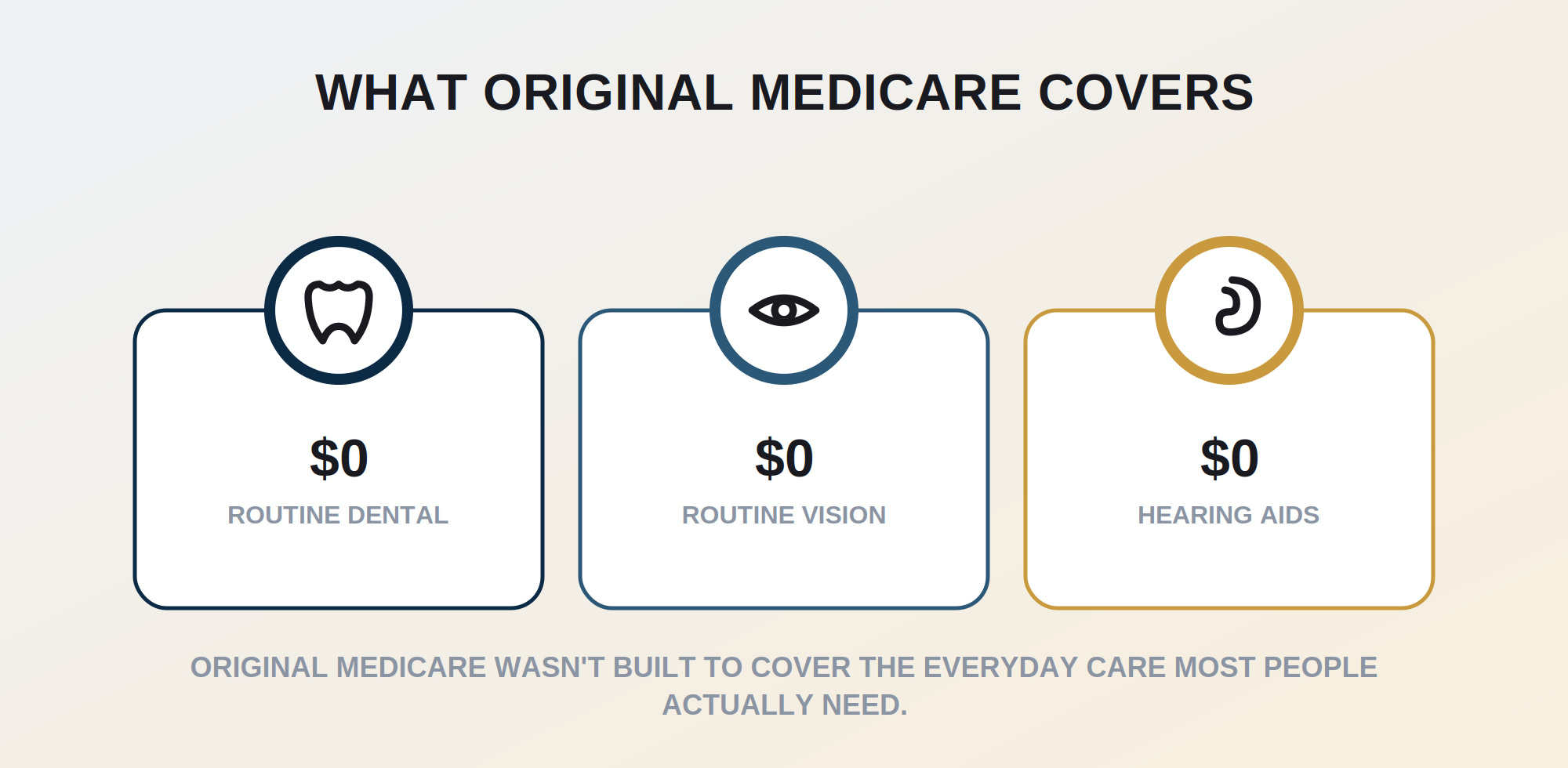
Part A and Part B do not cover routine dental care, routine vision care, or hearing aids. Not cleanings, not fillings, not eye exams for glasses, not the hearing aid itself. There are narrow medical exceptions, dental care tied directly to a covered surgical procedure, or an eye exam for diabetic retinopathy, but for the everyday care most of us actually need, Original Medicare simply wasn’t built to cover it. The National Council on Aging spells this out clearly in their consumer guide, and I recommend every new Medicare enrollee read something like it before they’re surprised by a bill. Medicare.gov’s own dental coverage page confirms the same narrow list of exceptions, straight from the source.
This is a real gap, not a small one
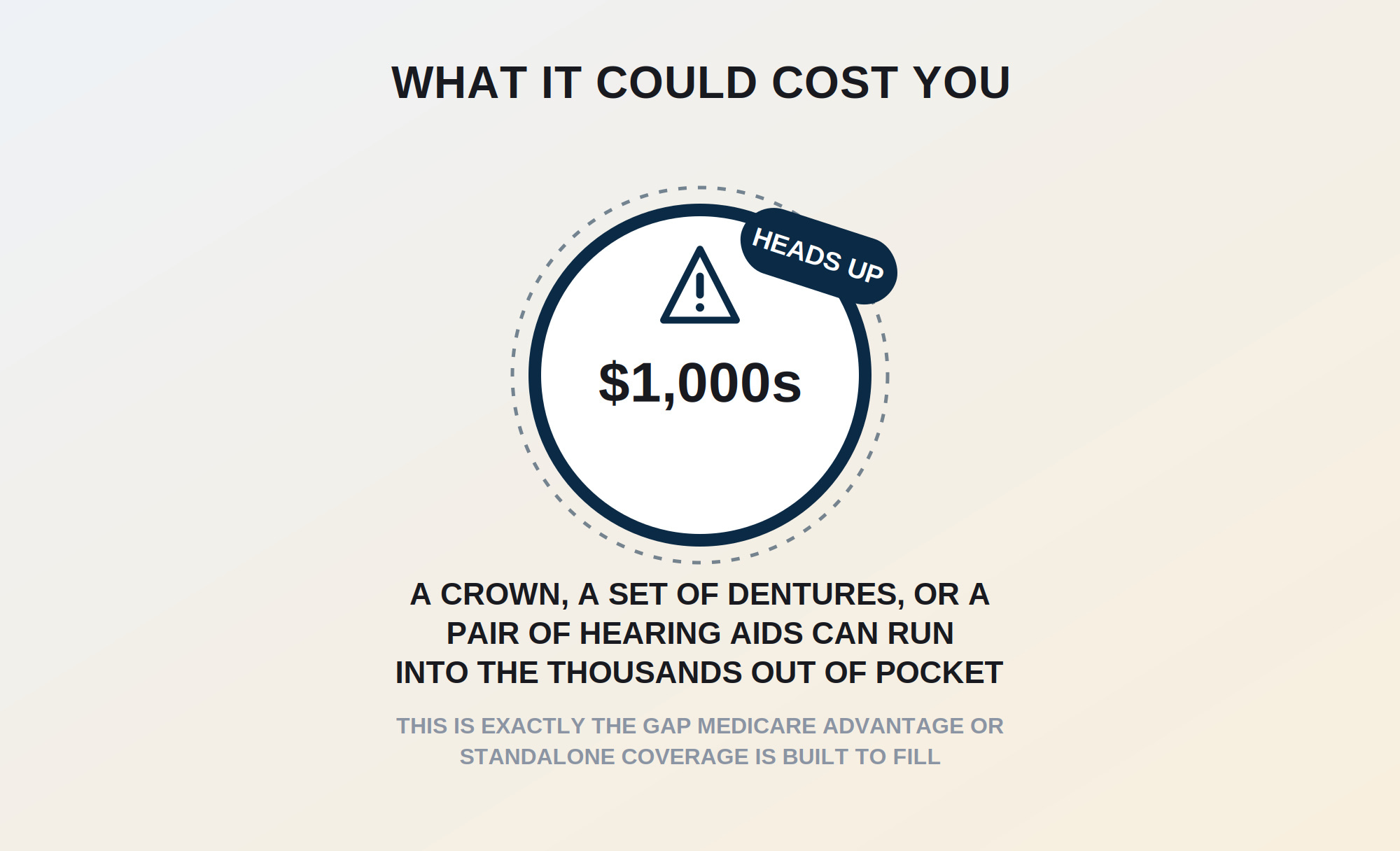
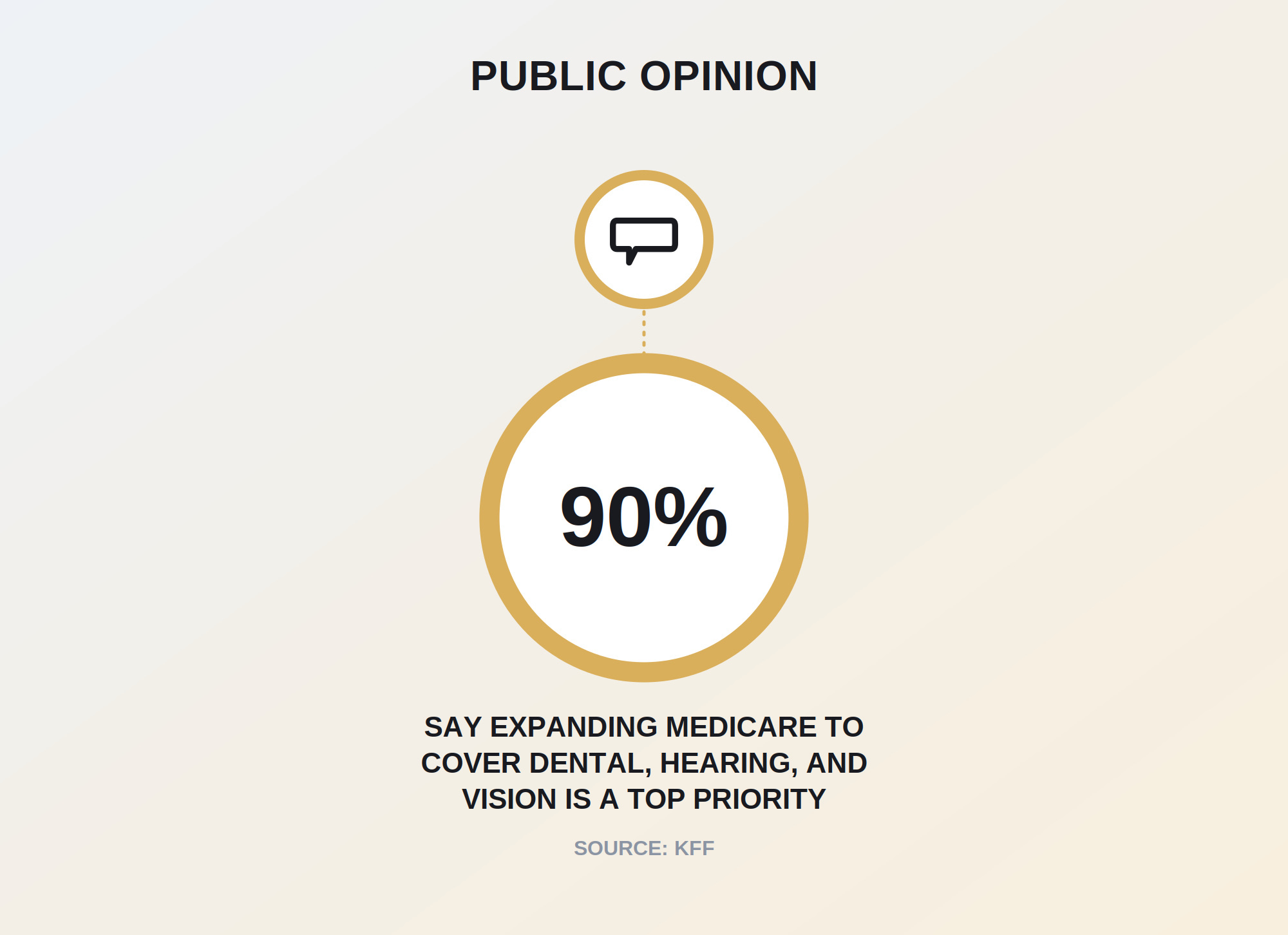
Dental work alone can run into the thousands of dollars for something like a crown or a set of dentures, and hearing aids often cost several thousand dollars per set. According to KFF’s research on dental, hearing, and vision coverage, roughly 90 percent of the public says expanding Medicare to cover dental, hearing, and vision should be a top priority for Congress. That tells you this isn’t some obscure complaint. It’s one of the most common frustrations people have with the program, and it’s exactly why I bring it up with every single client before they choose a plan, not after.
Where Medicare Advantage comes in
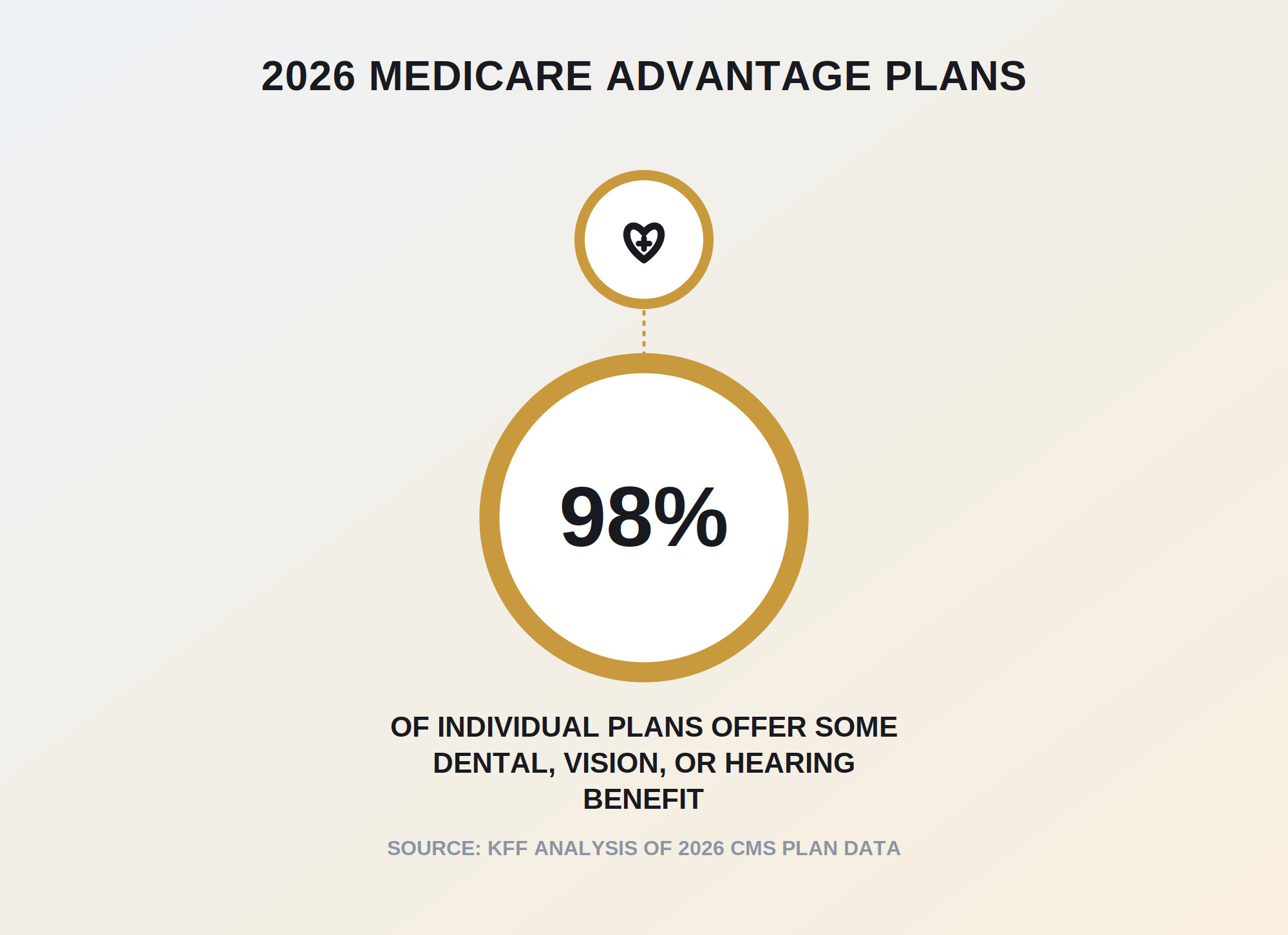
This is the main reason a lot of my clients choose Medicare Advantage over Original Medicare. According to KFF’s 2026 Medicare Advantage spotlight analysis of CMS plan data, roughly 98 percent or more of individual Medicare Advantage plans now offer some form of dental, vision, or hearing benefit, and that share has held steady from 2025 into 2026. That sounds great on paper, and often it is. But here’s the catch I always flag for clients: the word “benefit” doesn’t tell you the whole story. A plan might advertise a $2,500 dental allowance, but that number is often a maximum, not a guarantee, and it can come with copays, waiting periods, or a limited network of dentists.
Read the actual benefit summary, not just the brochure
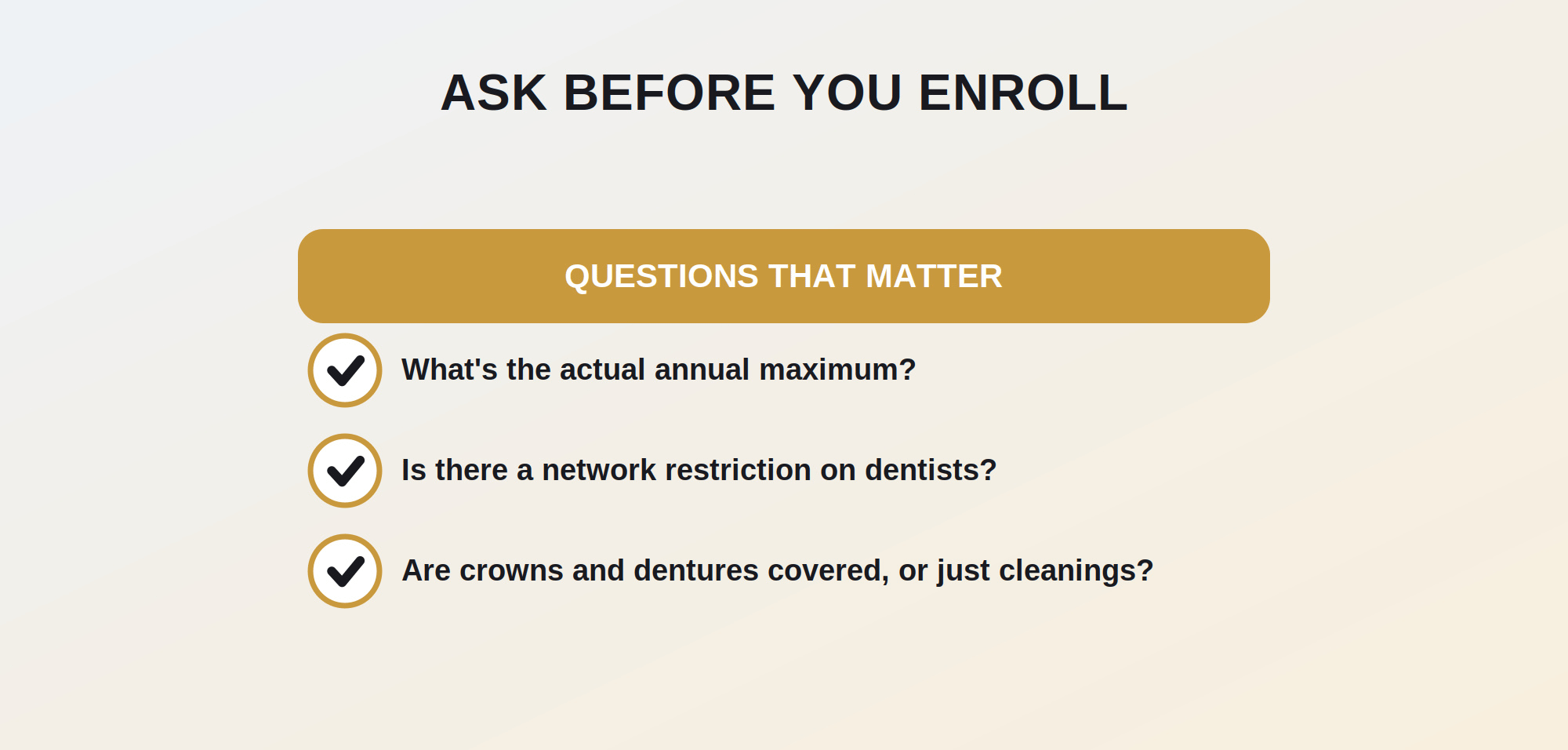
If dental, vision, or hearing coverage is a real priority for you, and for a lot of people it is, don’t just glance at whether a plan “includes” it. Ask what the annual maximum actually is, whether there’s a network restriction, and whether major work like crowns or dentures is covered or just cleanings and exams. I’ve seen plans that look nearly identical on the surface have wildly different real world value once you dig into the details. This is exactly the kind of thing that gets buried in fine print during a rushed open enrollment decision.
If you’re on Original Medicare and want this coverage
You do have options outside of switching your entire Medicare structure. Standalone dental, vision, and hearing insurance policies exist specifically for people who want to stay on Original Medicare with a Medigap policy but still want help with these costs. It’s not the right fit for everyone, but it’s worth knowing it exists rather than assuming your only choice is switching to Medicare Advantage.
My advice
Don’t wait until you’re sitting in a dentist’s chair to find out what’s covered. This is one of the easiest things to plan for in advance, and one of the most expensive to discover the hard way. If dental, vision, or hearing care matters to you or someone you love, let’s go over your specific plan options together before your next enrollment window closes.
Reach our office at 877-549-1212 or tmcmanamon@onesourcebenefits.com, and we’ll walk through it together.
Tracy McManamon, President, One Source Benefits, LLC