ONE SOURCE BENEFITS | MILITARY & VETERAN BENEFITS

This question comes from a good instinct. Medicare has real gaps, and shopping for something to cover them is exactly what a smart consumer should do. But for most military retirees, the answer is no, and the reason comes down to what TRICARE For Life is actually built to do.
TRICARE For Life Already Does What a Supplement Does
A Medicare Supplement, or Medigap plan, exists to cover the deductibles, copays, and coinsurance that Medicare leaves behind. That’s its entire job. TRICARE For Life does the same job. Once Medicare pays its share of a claim, TRICARE For Life automatically covers most of what’s left. Functionally, you already have a supplement, it just happens to come from the Department of Defense instead of a private insurer.

That’s the core reason most retirees don’t need to add a Medigap plan on top. You’d be paying a monthly premium for coverage that substantially overlaps with something you already have for free.
Where People Get Confused
The confusion usually comes from the word “supplement” itself. Medigap plans are marketed heavily to the general Medicare population, and a lot of that marketing doesn’t account for military retirees at all. Someone sees ads for Plan G or Plan N, assumes it applies to them the same way it would to a civilian retiree, and doesn’t realize TRICARE For Life is already filling that exact role.

It doesn’t help that Medigap open enrollment periods create real urgency for civilians, since missing that window can mean medical underwriting later. That urgency gets marketed hard, and it’s easy for a military retiree to get swept into a decision that was never built with their situation in mind.
When a Supplement Might Actually Make Sense
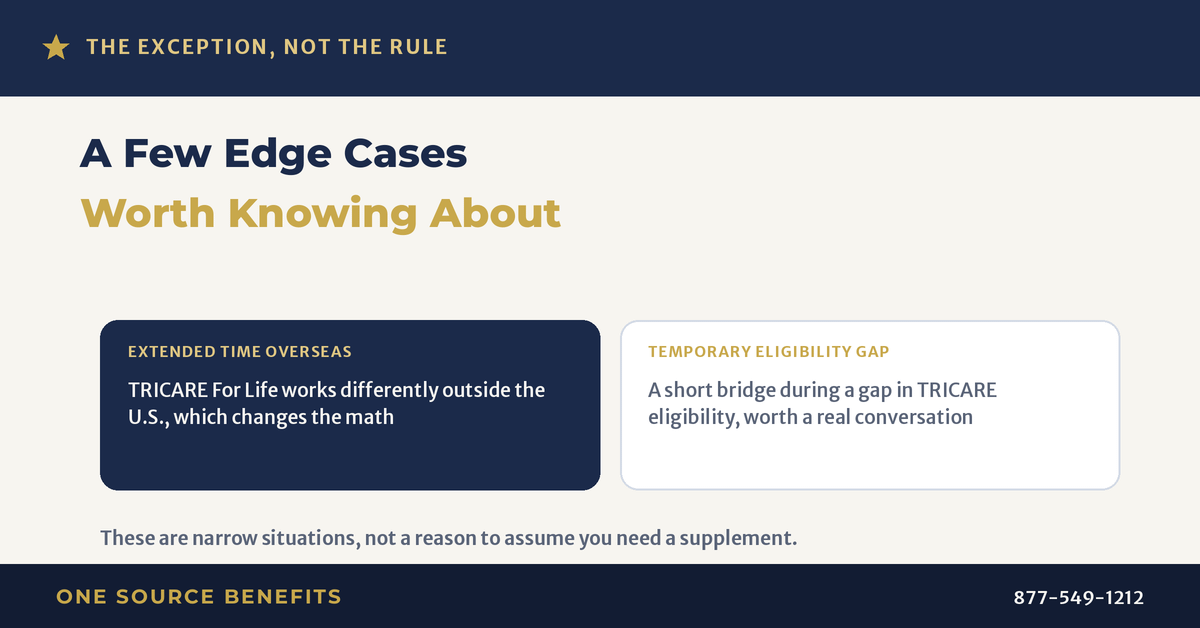
There are a few edge cases worth knowing about, though they’re the exception, not the rule. Some retirees who spend significant time overseas, where TRICARE For Life’s coverage works differently, look into supplemental options for that specific situation. Others going through a temporary lapse in TRICARE eligibility might consider it as a bridge. These are narrow situations, and they’re worth a real conversation rather than a blanket rule either way.
What to Do Instead of Buying a Supplement
If the goal is closing gaps, the more useful question for most military retirees isn’t “do I need a Medigap plan,” it’s “does a Medicare Advantage plan add anything TRICARE For Life doesn’t already cover.” Dental, vision, and hearing are the categories where TRICARE For Life is genuinely thin, and that’s where a Medicare Advantage plan paired with TRICARE For Life, not a Medigap plan, tends to be the better fit.

Quick Recap
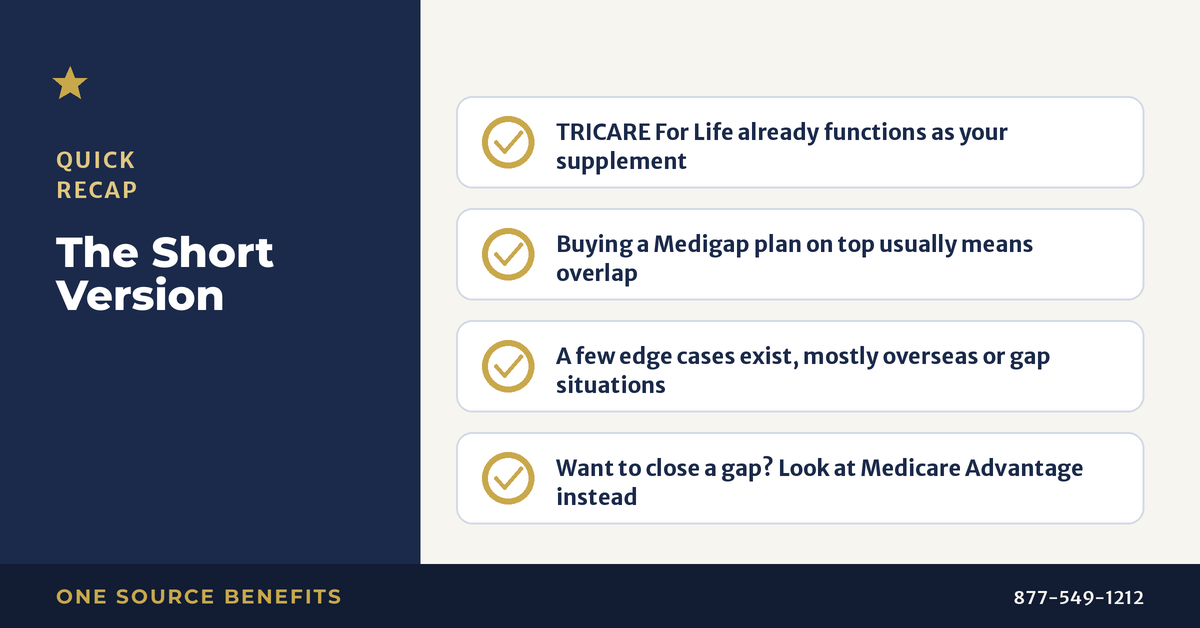
- TRICARE For Life already functions as your supplement, covering most of what Medicare leaves behind on its own.
- Buying a Medigap plan on top usually means paying for overlapping coverage.
- A handful of edge cases exist, mostly involving overseas care or eligibility gaps.
- If you want to close a real gap, look at Medicare Advantage for dental, vision, and hearing instead of a Medigap plan.
Not Sure If Your Situation Is the Exception?
Most of the time this is a simple answer, but not always, and getting swept into a Medigap plan you didn’t need is an expensive mistake to unwind. I’ve spent 36 years helping retirees sort out exactly this kind of overlap, and with family of my own who served, I know how much this specific confusion affects military households.
Give me a call at 877-549-1212 and let’s make sure you’re not paying for coverage you already have.